
India celebrated its 80th Independence Day on August 15, 2026, marking 79 completed years of freedom from British rule.
Key Highlights of 2026Themes: Focused on the "150 Years of Vande Mataram" and "Yuva Shakti for Viksith Bharat @2047" (Youth Power for a Developed India).Special Rendition: For the first time, 'Vande Mataram' was sung from the ramparts of the Red Fort during the national ceremony.Self-Reliance: Emphasized indigenous technologies, green energy transitions, and fully indigenized defense equipment used in the parade display
India at a Glance
Background
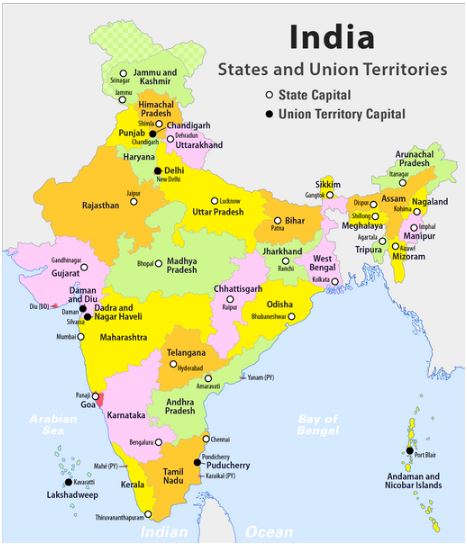
India has a unique culture and is one of the oldest and greatest civilizations of the world. India has achieved all-round socio-economic progress since its Independence. India covers an area of 32,87,263 sq. km, extending from the snow-covered Himalayan heights to the tropical rain forests of the south. As the 7th largest country in the world, India stands apart from the rest of Asia, marked off as it is by mountains and the sea, which give the country a distinct geographical entity. Bounded by the Great Himalayas in the north, it stretches southwards and at the Tropic of Cancer, tapers off into the Indian Ocean between the Bay of Bengal on the east and the Arabian Sea on the west.
Lying entirely in the northern hemisphere, the mainland extends between latitudes 8° 4' and 37° 6' north, longitudes 68° 7' and 97° 25' east and measures about 3,214 km from north to south between the extreme latitudes and about 2,933 km from east to west between the extreme longitudes. It has a land frontier of about 15,200 km. The total length of the coastline of the mainland, Lakshadweep Islands and Andaman & Nicobar Islands is 11,098.81 km.
Geography
Geographical information about India.
ParticularsDescription
LocationThe Indian peninsula is separated from mainland Asia by the Himalayas. The Country is surrounded by the Bay of Bengal in the east, the Arabian Sea in the west, and the Indian Ocean to the south
Geographic CoordinatesLying entirely in the Northern Hemisphere, the Country extends between 8° 4' and 37° 6' latitudes north of the Equator, and 68° 7' and 97° 25' longitudes east of it.
Indian Standard TimeIST, based on UTC with a +5:30-hour offset
Area3.3 Million sq. km
Telephone Country Code+91
Border CountriesAfghanistan and Pakistan to the north-west; China, Bhutan and Nepal to the north; Myanmar to the far east; and Bangladesh to the east of West Bengal. Sri Lanka is separated from India by a narrow channel of sea, formed by Palk Strait and the Gulf of Mannar.
Coastline11,098.81 km
Climate
In India, four principal seasons have been defined as:
i. Winter season: January and February;
ii. Pre-monsoon or summer season: March, April and May;
iii. South-west monsoon season: June, July, August, and September:
iv. Post-monsoon or north-east monsoon season: October, November and December.
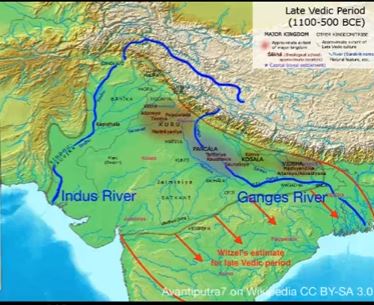
TerrainThe mainland comprises four regions, namely, Himalayas, - the great mountain range; Indo-Gangetic plains, lying between the Ganga and the Indus rivers; Thar, - the desert region; and the southern Deccan peninsula.
Natural ResourcesCoal, iron ore, manganese ore, mica, bauxite, petroleum, titanium ore, chromite, natural gas, magnesite, limestone, arable land, dolomite, barytes, kaolin, gypsum, apatite, phosphorite, steatite, fluorite, etc.
People
Information about Indian Citizens
ParticularsDescription
PopulationIndia's population, as on 1 March 2011 stood at 1,210.9 million (623.3 million males and 587.6 million females)
Population Growth RateThe average annual exponential growth rate stands at 1.64 per cent during 2001-2011
Birth RateThe Crude Birth Rate (CBR) was 18.3 in 2024.
Death RateThe Crude Death Rate (CDR) was 6.4 in 2024.
Life Expectancy Rate67.8 years (Males); 70.4 years (Females) in the period 2013-17
Sex Ratio943 at the national level, as per the 2011 Census.
NationalityIndian
Ethnic GroupsAll the five major racial types - Australoid, Mongoloid, Europoid, Caucasian, and Negroid find representation among the people of India.
ReligionsAs per the 2011 Census. ; Hindu 79.8%; Muslim 14.2%; Christian 2.3%; Sikh 1.7%; Buddhist 0.7%; Jain 0.4%, Other Religions & Persuasions (ORP) 0.7% and Religion Not Stated 0.2%.
LanguagesThere are 22 different languages that have been recognised by the Constitution of India, of which Hindi is an Official Language. Article 343(3) empowered Parliament to provide by law for continued use of English for official purposes.
LiteracyAccording to the provisional results of the 2011 census, the literacy rate in the Country stands at 74.04 per cent, 82.14% for males and 65.46% for females.


.jpg "Jaya Jaya Jaya Priya Bharatha")